









Mistake #1
Leading the player by the hand
In my article about level design in Half-Life 2, I wrote that levels are designed in such a way that the player moves in a certain direction by himself. There’s nothing wrong with that, but only as long as the player doesn’t notice it.
Screenshot of a mod for Skyrim that adds markers for unmarked items
Yes, even my favorite TES V: Skyrim has flaws! One of them is that almost every quest can be completed by following markers on the map. This can be a lifesaver for inexperienced players, but it breaks the immersion of the game.
Gameplay suffers because of the marker: there is less variability when you see in advance where you need to go. But most of all it affects the story.
The most striking example is the quest from Narfi in Ayvarstead. He asks you to find his sister, who, according to the innkeeper, was last seen on an island near the village.
Next, there are two options for passing.
- without a marker.
You go to the island the innkeeper talked about and see a mound there. You explore the mound and find part of Goldur’s seal, an item needed to complete another quest. After finding another exit from the mound, you fall into the river. After swimming downstream, you find a skeleton at the bottom of the river, next to which lies a bag – it contains the amulet of Narfi’s sister.
- With the marker.
You will immediately see where the skeleton lies and can complete the quest in 5 minutes. Yes, there’s an elaborate quest here that overlaps with another larger quest that turns into a go-get-a-fetch.
Pennywise has moved from Derry to Skyrim.
The game already has a solution to this problem – just turn off the markers. But it’s a bad idea because they don’t always explain to you how to get to a place, especially in secondary storylines or side quests.
Games like The Witcher (already from the first installment) or even the older “Ancient Scrolls” (TES III: Morrowind) allowed you to navigate the world almost without markers – by listening to NPCs’ lines and reading journal entries.
Deus Ex: Mankind Divided is a good example of a game where you can navigate without markers
Mistake #2.
Interfaces
The less the user has to interact with interfaces, the better – in any area.
Unfortunately, we can’t do without interfaces at all yet, but we can make them part of the game. The most striking example is Dead Space.
The health indicator is not in the corner of the screen, but on the back of the hero. Next to the weapon is the number of rounds. This looks good, fits perfectly into the game’s setting and does not create additional layers between the player and the game.
Another example is Metro: Exodus:
The compass is on the hand, and the amount of ammo in the magazine and inventory the player has to count for himself – no indicators. Even the game log is an object that can be picked up:
Two problems arise mainly because of the interfaces.
- Too much interface.
As a rule, this is a sin of MMORPGs.
World of Warcraft.
Which, however, does not prevent them much to involve the players.
2. Interface is poorly integrated into the environment
It is not always possible to make the interface part of the game so that it was not only justified by the setting, but also gave the user all the necessary information.
As a solution here you can advise to maintain a balance: try to fit the interface into the game, but if it only gets worse, return the usual HUD (Heads-Up Display, part of the visual player interface).
Mistake #3.
“Urgent” quests.
One of the main storylines of the third The Witcher is the rescue of his adopted daughter Ciri. Geralt of Rivia needs to find her as soon as possible or she will die. Imagine your daughter has been kidnapped and every minute counts. You’re ready to tear everyone to pieces, but there’s a calculation involved. So, what’s your first move?
That’s right, gwint!
Now can we save Ciri? Of course! But first we have to fight in the tavern for money.
Okay, that’s enough fun. Now let’s run off and save our beloved daughter, while going through all the side quests and seducing anything that moves.
I bet you know plenty of other games where the main quests are just as “urgent.”
Another bad solution is to add timers to quests, especially if the player can see the countdown on the screen (Portal doesn’t count).
Give the player a quest, tell them it’s urgent, but leave them free and remove the timers. Game designers Deus Ex: Human Revolution added such a quest with hostage rescue: if instead of flying to rescue them, you waste time looking in every corner, they will just be dead when you deign to appear.
Mistake #4.
Fatalism
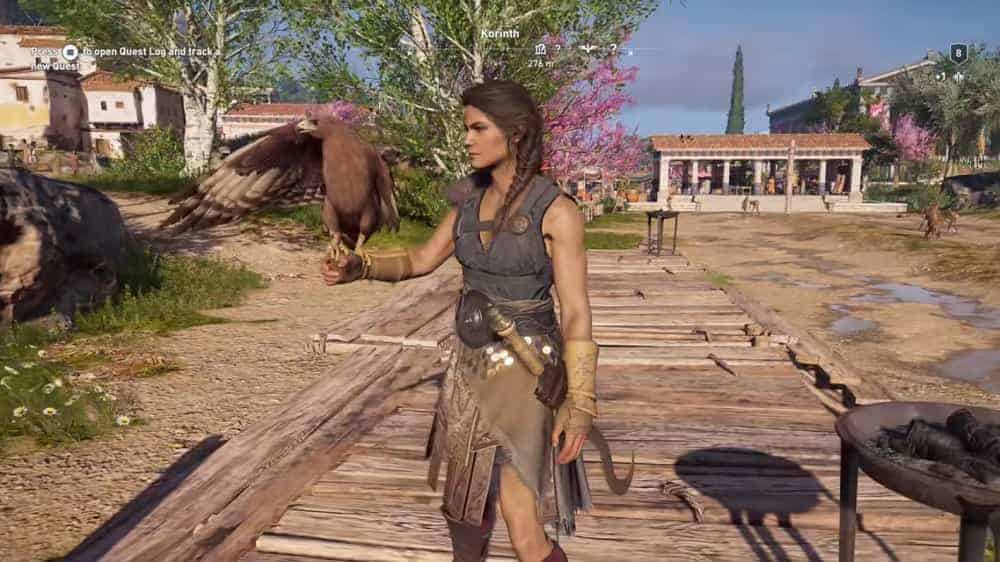
The Assassin’s Creed series of games is one of the few series whose developers have the right to show you a losing screen because of any little thing. After all, in the story, you are in Animus, a machine that allows you to live out your ancestors’ memories. If you don’t behave like them, you desynchronize.
For example, you can not kill innocents, go beyond the edge of the location, go far from the target, give yourself away to the enemy (in some missions) and so on.
For example,
you can’t kill innocents, go beyond the edge of the location, go far from the target, expose yourself to the enemy (in some missions), and so on.
In other games it looks strange – you deprive the player of freedom and variability. Of course, sometimes it’s worth telling the player that he failed the mission and it’s critical. For example, in Half-Life 2 you have to defend Alix as yourself.
But in general, you should not punish players for their style of play. Instead, encourage them if they play the way you intended. For example, in the Hitman series of games, you can just shoot everyone. But if you play stealthy, you get extra points, money, a title, or an achievement.
The “Pianist” rating in Hitman: Blood Money can be obtained if you only kill opponents with a string
Mistake #5.
Invisible Walls
Imagine that you are walking through a location and see a place where you can pass, but your character can’t get through. For example, because he can not jump. And if he can, the game just does not let him fly over the obstacle.
The famous “Oh no, the door is locked” meme, but in Max Payne there was no problem with the passage.
In real life, we would have easily gotten over, sideways, or underneath, pushed back, or blew up the obstacle. If your game doesn’t give you those options, you’re better off avoiding those walls.
Conclusion
At first glance, these seem like little things. But once players notice such mistakes in your game, they will feel knocked out. Make too many mistakes or fail to re-engage players – you’ll lose your audience.
To avoid immersion problems, enroll in our game design course. You’ll not only learn how to come up with ideas and concepts, but also how to implement them on modern game engines.